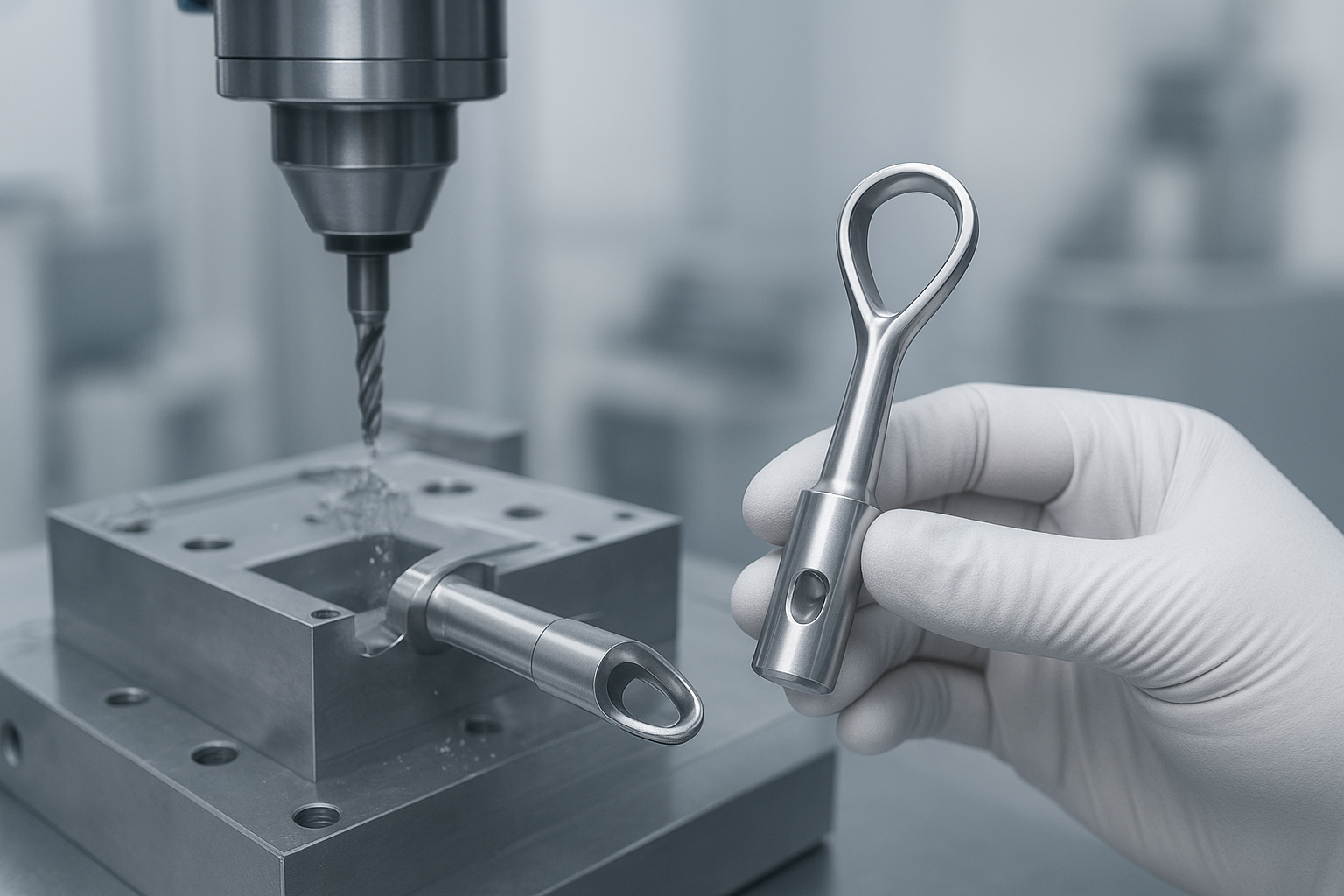
1. Why High Precision Matters
Medical devices often involve life-critical applications, such as surgical instruments, implants, diagnostic equipment, and minimally invasive tools. Even the smallest deviation in dimensional accuracy can impact performance or cause failure.
Tight tolerances, often measured in microns, are required to ensure that parts fit together seamlessly and function as intended. Precision machining techniques such as CNC milling, turning, and grinding are essential to achieving this level of accuracy.
2. The Importance of High Cleanliness
Beyond precision, cleanliness is equally critical. Metal parts used in medical applications must be free from contaminants such as oil, dust, or microscopic particles that could compromise patient safety.
Post-machining cleaning processes—such as ultrasonic cleaning, passivation, and specialized washing—are commonly employed to remove residues and ensure compliance with medical-grade standards. In some cases, components are produced in cleanroom environments to minimize exposure to airborne contaminants.
3. Materials Selection for Medical Components
The choice of material plays a key role in meeting both precision and cleanliness requirements. Stainless steel, titanium, and cobalt-chrome alloys are widely used due to their biocompatibility, corrosion resistance, and ability to withstand sterilization processes.
Each material requires specialized machining techniques to ensure both durability and surface integrity.
4. Regulatory Standards and Compliance
Medical device components must comply with stringent international standards such as ISO 13485, FDA regulations, and GMP (Good Manufacturing Practices).
These frameworks ensure that every step—from machining and cleaning to packaging and sterilization—meets strict quality and safety guidelines.
Manufacturers must implement rigorous quality control systems to maintain compliance and traceability.
5. Balancing Efficiency and Quality
Meeting the dual requirements of precision and cleanliness presents challenges for manufacturers. However, advancements in machining technology, automation, and quality inspection systems have enabled companies to deliver consistent results while maintaining efficiency.
Continuous improvement and investment in specialized equipment are key to staying competitive in this demanding sector.
Summary
In medical device manufacturing, there is no compromise when it comes to quality. The dual demands of high precision and high cleanliness define the industry’s expectations and ensure that devices perform reliably and safely for patients worldwide.
Manufacturers who can consistently meet these standards not only gain a competitive edge but also contribute directly to improving healthcare outcomes.
See our Facility and Inspection Equipment