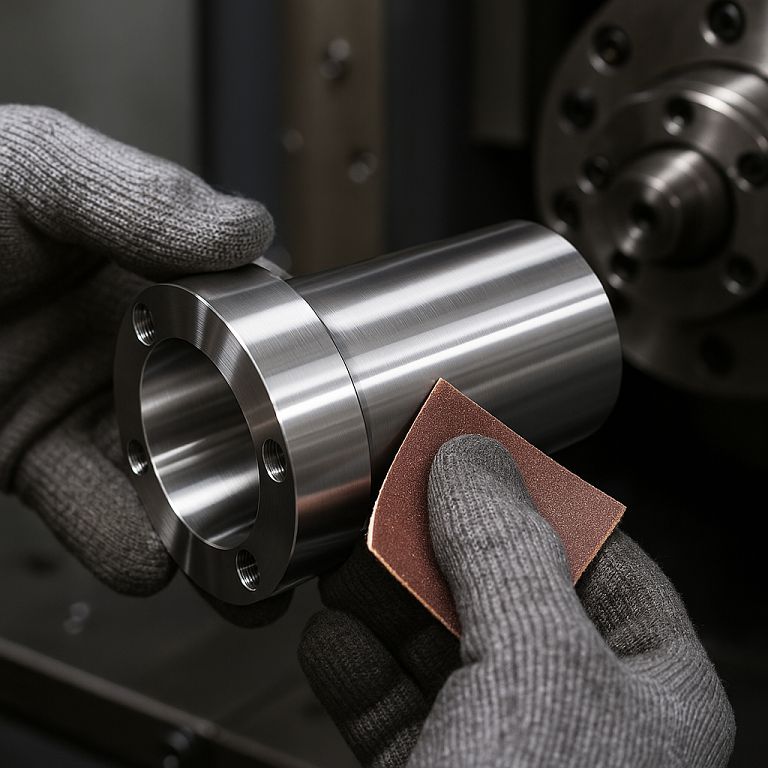
Understand the Causes of Poor Surface Finish
Stainless steel is prone to work hardening and heat buildup during machining. This can lead to several issues:
Tool wear occurs faster due to the hardness and abrasion resistance of the material.
Built-up edge forms when material sticks to the cutting tool, affecting surface texture.
Excess heat can warp the surface or cause discoloration.
Recognizing these causes is the first step to implementing proper corrective techniques.
Control Tool Wear for Stable Cutting
Managing tool wear is essential for achieving a consistent finish. A dull or overheated tool increases friction, leading to rough surfaces and dimensional inaccuracies.
Recommendations:
Use high-quality carbide or coated tools designed for stainless steel.
Maintain sharp edges to minimize cutting force.
Replace or rotate tools before excessive tool wear affects surface texture.
Stable tooling directly leads to cleaner, more repeatable finishing results.
Prevent Built-Up Edge Formation
Built-up edge (BUE) occurs when stainless steel adheres to the tool tip during cutting. This can cause tearing, scratches, and inconsistent finish quality.
To reduce BUE:
Use polished or honed tool edges to improve chip flow.
Adjust feed and speed to promote continuous chip evacuation.
Increase lubrication effectiveness using targeted coolant streams.
Minimizing built-up edge ensures the material shears cleanly rather than sticks and tears.
Optimize Coolant Use for Heat Control
Effective coolant application helps control temperature, reduce friction, and improve chip removal. Heat management is critical because stainless steel retains heat during cutting.
Best practices:
Use high-pressure coolant to flush chips and cool the cutting zone.
Ensure proper direction and volume of coolant flow.
Consider Minimum Quantity Lubrication (MQL) for finishing operations.
Good coolant delivery directly reduces thermal distortion and improves surface consistency.
Use Low-Speed Cutting to Reduce Heat and Work Hardening
While aluminum and some steels benefit from high cutting speeds, stainless steel often requires low-speed cutting to prevent overheating and work hardening.
Guidelines:
Lower spindle speed while maintaining steady feed.
Avoid slow feed rates that cause rubbing instead of cutting.
Monitor heat buildup and adjust parameters in real time.
Low-speed cutting reduces thermal stress and supports better control over the finished surface.
Apply Fine Finishing Passes for the Final Texture
After rough cutting and semi-finishing, apply a fine finishing pass to achieve the desired surface quality.
Effective fine finishing techniques:
Use sharp finishing tools with light depth of cut.
Maintain consistent toolpath to avoid directional marks.
Consider secondary processes such as polishing or lapping if ultra-smooth finishes are required.
A controlled finishing stage ensures the final surface meets both visual and functional specifications.
Summary
Improving surface finish when machining stainless steel requires careful management of tool wear, prevention of built-up edge, effective coolant application, strategic low-speed cutting, and a structured fine finishing approach.
By understanding stainless steel’s behavior and adapting machining techniques accordingly, manufacturers can produce high-quality parts with clean, accurate, and reliable surface finishes—reducing rework, improving efficiency, and increasing customer satisfaction.
Get more info, please visit our CNC Turning Parts or Products. Contact us for your customized metal parts.