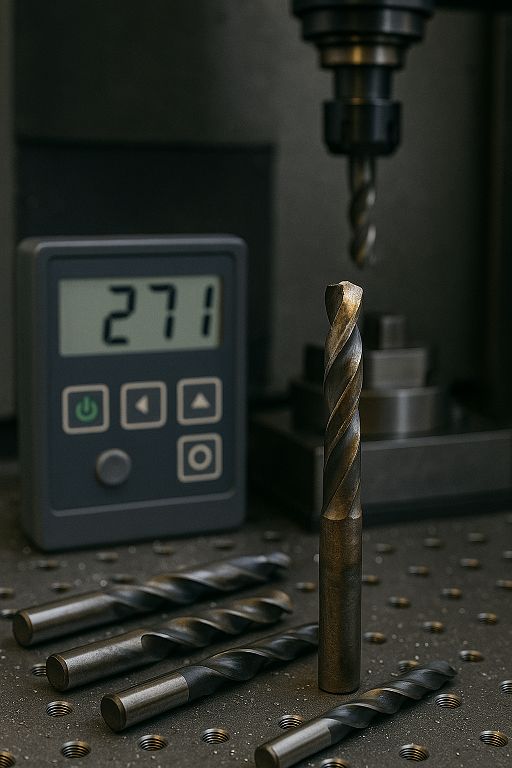
Why Tool Life Matters in Machining Efficiency
Cutting tools directly influence the cutting speed, surface finish, and tolerance accuracy of machined parts.
When tools wear out unpredictably, the result can include dimensional errors, scrap parts, machine stoppages, or emergency replacements.
These inefficiencies accumulate quickly, impacting both productivity and profitability.
Strong tool life management ensures that every tool is used to its maximum safe lifespan—neither replaced too early nor allowed to degrade to failure.
Tool Monitoring for Real-Time Performance Feedback
Tool monitoring systems track parameters such as spindle load, vibration, and cutting temperature in real time. When abnormal cutting conditions are detected, the system alerts operators or automatically adjusts machining parameters to avoid failure.
Benefits of tool monitoring include:
More consistent surface quality
Reduced scrap and rework
Early warning before tool breakage
Continuous improvement through performance data
By identifying wear trends early, manufacturers gain tighter control over part quality and machining reliability.
Smart Tool Inventory Management
Maintaining the right tool inventory ensures that tools are available when needed—without excessive stock that ties up capital or storage space.
Automated tool tracking systems can record tool usage history, remaining life, and replacement schedules across multiple machines.
Advantages of inventory optimization:
Prevents production delays due to missing or incompatible tools
Avoids excessive purchasing and waste
Ensures that high-value specialty tools are used efficiently
Good tool inventory management helps sustain smooth workflow and stable delivery performance.
Predictive Maintenance for Planned Replacement
Traditional tool replacement schedules are based on operator experience or fixed cycle counts.
In contrast, predictive maintenance uses real cutting data and tool wear measurements to determine the ideal moment for tool replacement.
This approach:
Extends tool life safely
Reduces unexpected tool failures
Balances performance, cost, and accuracy
Supports standardized process planning across batches
Predictive maintenance is a powerful method for stabilizing machining operations and ensuring long-term cost control.
Downtime Reduction and Cost Control Through Integration
When tool monitoring, tool inventory, and predictive maintenance are integrated into a comprehensive tool life management strategy, manufacturers see measurable improvements in downtime reduction and cost control.
Key cost-saving outcomes include:
Fewer unplanned machine stops
Reduced scrap rate and rework
Lower tool consumption over time
Higher machine utilization rates
Longer tool spindle and turret service life
Together, these improvements lead to more efficient operations and stronger profitability.
Summary
Effective tool life management is essential for reducing machining costs while maintaining quality and reliability.
By using tool monitoring for real-time analysis, optimizing tool inventory, and applying predictive maintenance, manufacturers can achieve significant downtime reduction and stronger cost control across production lines.
In today’s competitive manufacturing environment, mastering tool life management is not just a technical advantage—it is a strategic necessity.
Get more info, please visit our CNC Turning Parts or Products.
Contact us for your customized metal parts.