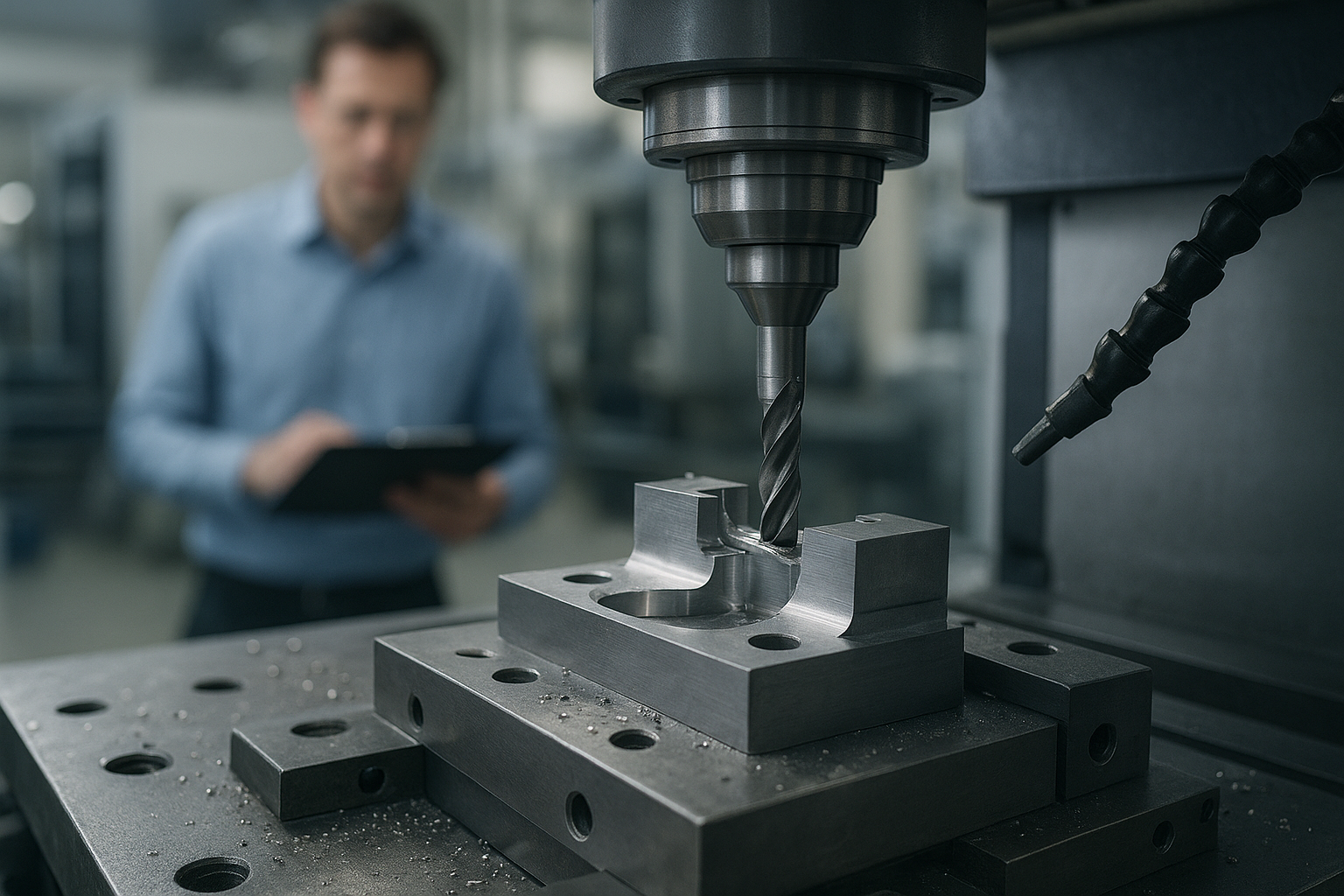
1. Involve Manufacturing Experts Early
One of the most effective ways to avoid machining bottlenecks is to integrate engineers and machinists into the product development process from the start.
Early collaboration ensures that designs are not only functional but also practical to manufacture. This approach, often called Design for Manufacturability (DFM), can prevent costly redesigns later in the process.
2. Simplify Geometries Where Possible
Complex geometries often require specialized tooling, multiple setups, or advanced machining strategies, which increase cycle times and costs.
By simplifying shapes, reducing unnecessary features, and minimizing undercuts or deep cavities, designers can help ensure smoother machining and faster throughput.
3. Standardize Materials and Tolerances
Material selection and tolerance specifications are critical factors in machining efficiency. Choosing exotic materials or overly tight tolerances where they are not functionally required can lead to production slowdowns.
Using standard alloys and specifying realistic tolerances allows for faster machining and reduces the likelihood of rework.
4. Consider Tool Accessibility
Designs that ignore tool accessibility can create serious bottlenecks. Deep holes, sharp internal corners, or features that cannot be reached by standard cutting tools require custom solutions, slowing down the machining process.
Designers should consider tool paths and accessibility during the design stage to avoid such issues.
5. Plan for Scalability
A design that works well for prototyping may not be efficient in large-scale production. Early planning should include considerations for high-volume machining, automation, and fixture design.
For example, designing parts that can be held securely and consistently during machining helps reduce setup times and ensures repeatable quality.
6. Leverage Digital Simulations and Prototyping
Computer-aided manufacturing (CAM) simulations and rapid prototyping allow engineers to test designs virtually before committing to production.
Identifying potential machining challenges through simulation helps optimize tool paths, minimize cycle times, and reduce the risk of bottlenecks.
Summary
Avoiding machining bottlenecks begins with smart design decisions and early collaboration between product developers and manufacturing experts.
By simplifying geometries, using standard materials, ensuring tool accessibility, and planning for scalability, companies can streamline production and reduce costs.
When product development teams integrate manufacturability considerations from the very beginning, they not only speed up time-to-market but also create more reliable and cost-effective products.
See our Facility and Inspection Equipment