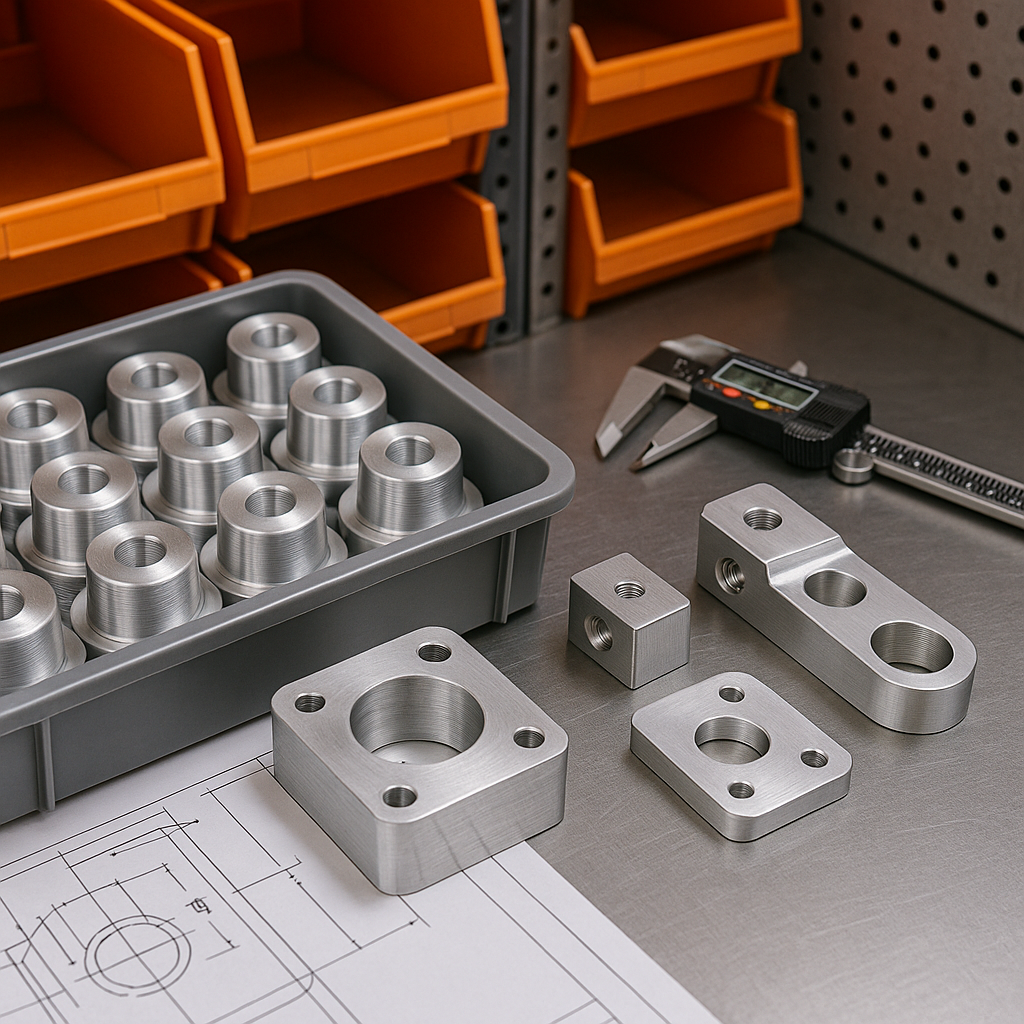
What Is Lean Manufacturing?
Lean manufacturing is a philosophy that originated from the Toyota Production System, emphasizing continuous improvement, waste reduction, and customer value.
Rather than focusing solely on increasing output, lean strategies aim to streamline processes, improve workflow, and create more with fewer resources.
For metalworking companies, this means delivering precision components efficiently while maintaining the highest standards of quality.
The Seven Wastes in Metalworking
One of the core principles of lean is the elimination of waste, often categorized into seven areas:
Overproduction: Producing more parts than required, leading to excess inventory.
Waiting: Idle time caused by machine downtime or delayed materials.
Transport: Unnecessary movement of materials or components between processes.
Overprocessing: Using more complex equipment or steps than necessary.
Inventory: Excess stock that ties up capital and space.
Motion: Inefficient worker or machine movements.
Defects: Parts requiring rework or scrapping due to quality issues.
Identifying and addressing these wastes can transform shop floor performance in metalworking operations.
Key Lean Strategies for Metalworking Companies
5S Workplace Organization: Sorting, setting in order, shining, standardizing, and sustaining a clean and efficient workspace reduces errors and improves safety.
Value Stream Mapping: Analyzing the entire production flow highlights bottlenecks and opportunities for streamlining.
Cellular Manufacturing: Organizing machines and tools into cells for specific product families minimizes transport and waiting times.
Kanban and Pull Systems: Producing only what is needed when it is needed reduces excess inventory and overproduction.
Standardized Work: Documenting and following best practices ensures consistency and quality across operations.
Continuous Improvement (Kaizen): Encouraging employees to identify small, incremental improvements drives long-term efficiency.
Technology and Automation in Lean Metalworking
Modern lean strategies often integrate advanced technologies such as CNC automation, IoT-enabled monitoring, and real-time data analytics.
These tools help metalworking companies track machine utilization, reduce downtime, and optimize cutting parameters for greater efficiency.
Digital integration also supports predictive maintenance, ensuring machines operate at peak performance with minimal unexpected interruptions.
Benefits of Lean Manufacturing
For metalworking companies, the benefits of lean implementation are substantial:
Reduced lead times through streamlined workflows.
Lower costs by cutting waste and improving material utilization.
Improved quality with standardized processes and defect prevention.
Higher customer satisfaction due to consistent delivery and reliability.
Stronger competitiveness in global markets with efficient and sustainable practices.
Summary
Lean manufacturing offers metalworking companies a clear path to greater efficiency, cost savings, and customer value.
By focusing on waste reduction, process optimization, and continuous improvement, manufacturers can build a culture of excellence that strengthens long-term growth.
In an era of rising competition and global supply chain pressures, lean strategies are no longer optional—they are essential for success in precision metalworking.