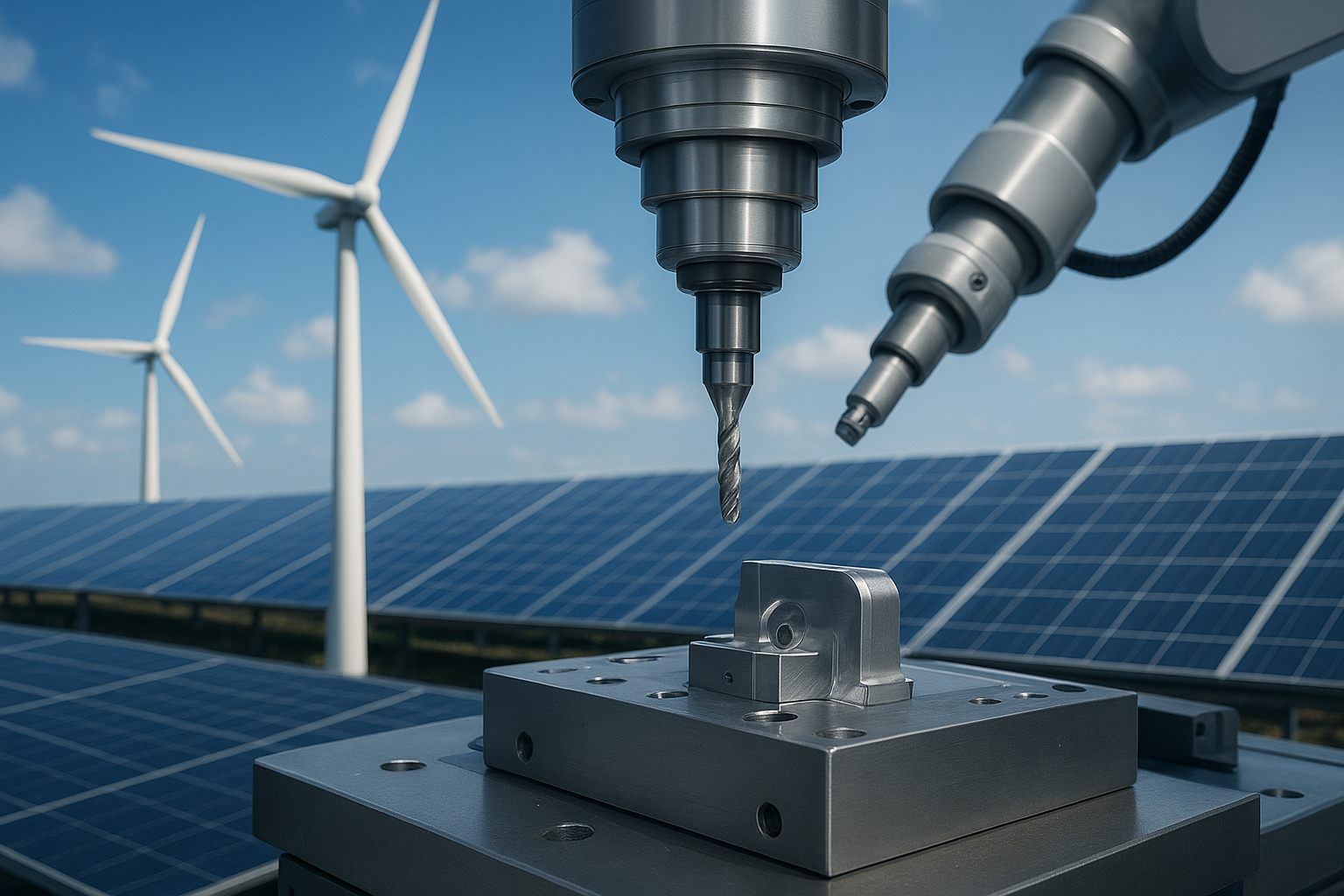
1. Precision in Wind Power Components
Wind turbines are massive structures with thousands of moving and static parts. Components such as gearboxes, bearings, shafts, and housings must be machined to exact specifications to withstand continuous stress and extreme weather conditions.
Gear Systems: High-precision gears are essential for transmitting power from the turbine blades to the generator without loss of efficiency.
Bearings and Hubs: Precision-machined bearings reduce friction and improve the lifespan of turbines.
Structural Parts: Machined housings and casings ensure proper alignment and stability in turbine assemblies.
Even a small error in tolerance can result in excessive vibration, reduced efficiency, or costly maintenance. This makes precision machining indispensable to wind power manufacturing.
2. Precision in Solar Power Systems
While solar energy systems may appear simpler than wind turbines, they also require a wide range of precision components.
Mounting and Tracking Systems: Solar panels must be mounted on structures that can resist wind loads while allowing precise adjustment of angles. Machined joints and fasteners are key to maintaining stability and efficiency.
Inverters and Power Electronics: Precision-machined housings protect sensitive electronic components, ensuring safe and reliable operation.
Cooling Systems: Some high-capacity solar applications require thermal management systems that rely on precisely machined parts for fluid control and heat dissipation.
3. Materials and Machining Challenges
The renewable energy sector demands materials that can endure extreme conditions. High-strength steels, aluminum alloys, and composites are frequently used.
These materials require advanced machining techniques such as multi-axis CNC milling, turning, and grinding to achieve both durability and dimensional accuracy.
4. The Link Between Efficiency and Machining Quality
Efficiency in renewable energy systems depends not only on design but also on the quality of machining. For example, smoother surfaces in turbine components reduce friction, while accurate tolerances in solar mounting systems ensure consistent energy capture.
Precision machining directly translates to longer service life, reduced downtime, and higher energy yields.
5. Future Outlook
As the energy industry continues its rapid growth, the demand for precision machining will only increase. Emerging technologies such as offshore wind farms and next-generation solar concentrators will require even more advanced manufacturing solutions.
Companies that invest in precision machining capabilities will be positioned to play a vital role in the renewable energy transition.
Summary
The renewable energy industry relies on precision machining to meet its ambitious goals of efficiency, reliability, and sustainability. From wind turbine gear systems to solar panel mounting structures, every detail matters.
As the world accelerates its move toward clean energy, precision machining will remain a cornerstone of innovation and success in the sector.
See our Facility and Inspection Equipment