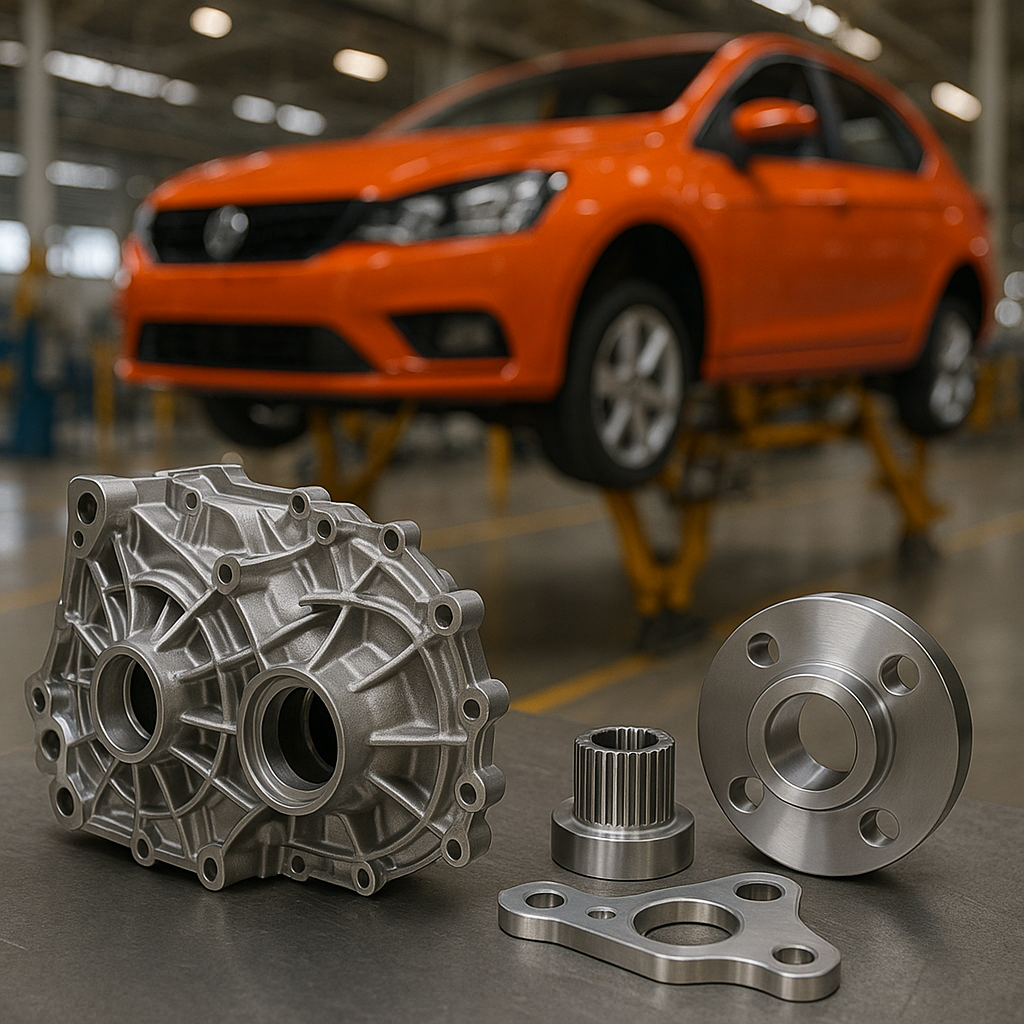
1. Key Categories of Automotive Components
Automotive components can be broadly classified into several categories:
Powertrain Components: Engines, transmissions, and drivetrains that provide power and control vehicle performance.
Chassis and Structural Parts: Frames, axles, and suspension systems that provide stability and safety.
Body and Exterior: Panels, doors, bumpers, and lighting systems that form the vehicle’s structure and appearance.
Interior Systems: Seats, dashboards, air conditioning, and infotainment units for comfort and user experience.
Electronic Systems: Sensors, control units, and wiring harnesses that enable advanced driver-assistance systems (ADAS) and modern connectivity.
2. Materials in Automotive Component Manufacturing
Material selection plays a crucial role in balancing strength, weight, cost, and performance:
Steel: Widely used for its strength and cost-effectiveness in structural and safety-critical components.
Aluminum Alloys: Increasingly used to reduce vehicle weight and improve fuel efficiency.
Plastics and Composites: Provide lightweight solutions for interiors and non-load-bearing parts.
Advanced Alloys and Titanium: Used in high-performance vehicles and specialized applications.
3. Manufacturing Processes
Automotive components are produced using a wide range of manufacturing technologies:
CNC Machining: Ensures precision for engine parts, gears, and other high-tolerance components.
Casting and Forging: Ideal for high-strength parts such as engine blocks and crankshafts.
Stamping and Welding: Essential for large-scale body and chassis production.
Injection Molding: Used for plastic parts and interior components.
Additive Manufacturing (3D Printing): Emerging as a method for prototyping and producing complex, lightweight structures.
4. Quality Control and Standards
Given the safety-critical nature of automobiles, strict quality control measures are essential. Automotive manufacturers often follow IATF 16949 standards, which emphasize defect prevention, traceability, and continuous improvement. Precision measurement, durability testing, and real-time inspection systems ensure parts meet performance and safety requirements.
5. Industry Trends and Challenges
The automotive industry is rapidly evolving, bringing new challenges and opportunities for component manufacturing:
Electrification: Electric vehicles require new components such as battery packs, electric motors, and thermal management systems.
Lightweighting: Manufacturers are increasingly focusing on reducing vehicle weight for efficiency and environmental performance.
Automation and Smart Manufacturing: Industry 4.0 technologies, including robotics and IoT, are streamlining production lines and improving efficiency.
Sustainability: Recyclable materials and energy-efficient production methods are becoming priorities for both manufacturers and regulators.
Summary
Automotive component manufacturing is the backbone of the automotive industry, combining precision engineering, advanced materials, and strict quality standards.
As the industry shifts toward electrification, automation, and sustainability, manufacturers must adapt by investing in new technologies and processes. Ultimately, the ability to produce reliable, high-performance components will remain the key to driving innovation and meeting the demands of future mobility.
See our Facility and Inspection Equipment