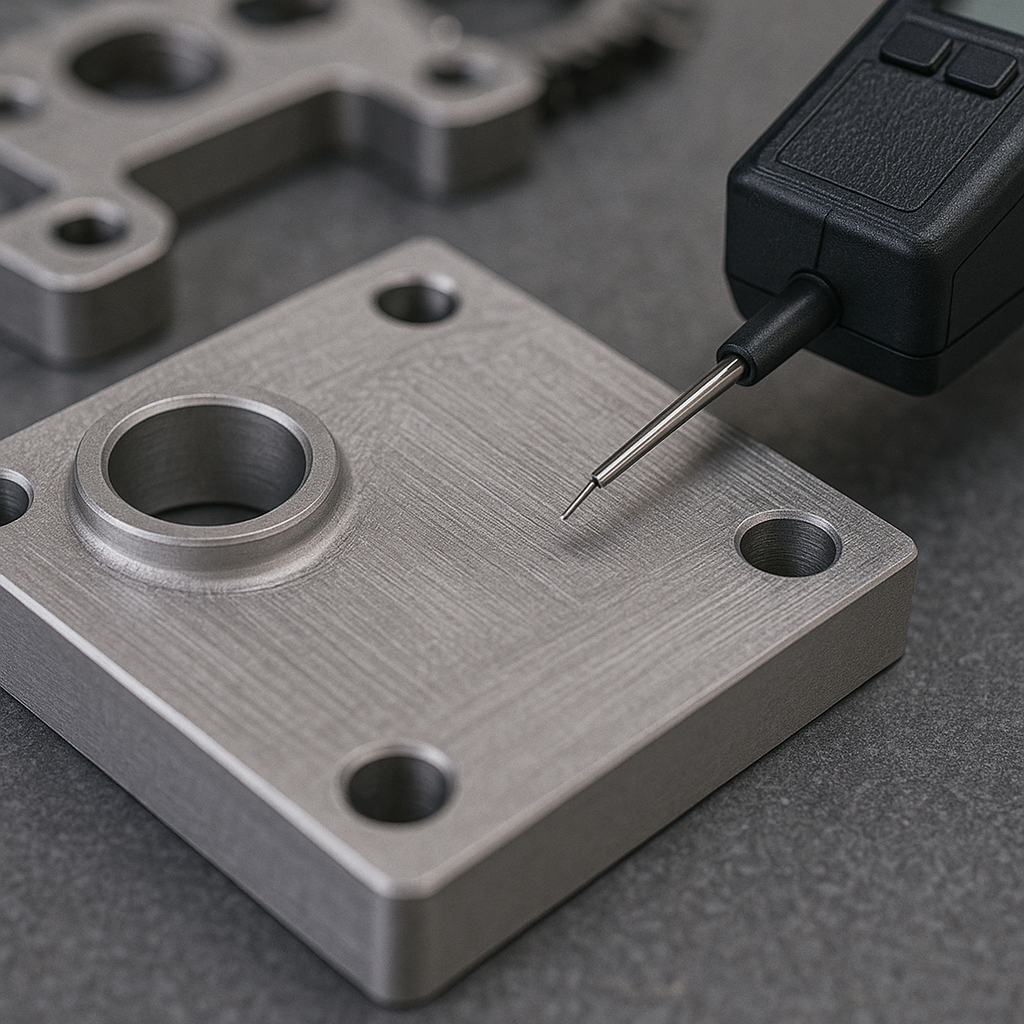
1. Defining Surface Roughness
Surface roughness refers to the fine irregularities present on a material’s surface, typically measured using parameters such as Ra (average roughness) or Rz (maximum height of profile).
While no surface is perfectly smooth, the acceptable level of roughness depends on the part’s intended function.
2. Impact on Mechanical Performance
Friction and Wear: Rougher surfaces create higher friction, leading to increased wear and reduced lifespan of moving parts such as gears, bearings, or pistons. Conversely, overly smooth surfaces may reduce lubrication retention, causing premature failure.
Fatigue Resistance: Surface irregularities can act as stress concentrators where cracks initiate, reducing fatigue life. A controlled surface finish helps improve component durability.
3. Sealing and Leakage Control
For parts such as valves, gaskets, or sealing surfaces, surface finish directly impacts sealing performance.
Too rough: Leads to gaps and leakage.
Too smooth: May prevent effective adhesion of sealants or gaskets.
The ideal surface is one that balances tightness with functional adhesion.
4. Corrosion Resistance
Rough surfaces tend to trap moisture, chemicals, or contaminants, accelerating corrosion. A smoother finish provides fewer crevices for corrosive agents to attack, making surface quality especially important in aerospace, medical, and marine applications.
5. Functional Examples Across Industries
Automotive: Cylinder bores require a controlled finish to retain oil for lubrication while reducing wear.
Medical Devices: Implants need carefully engineered roughness—smooth enough for patient safety but sometimes roughened in targeted areas to enhance bone integration.
Aerospace: Turbine blades and structural components require optimized finishes to reduce drag and improve fatigue life.
6. Balancing Cost and Performance
Achieving ultra-smooth finishes often requires additional machining, polishing, or coating processes, which increase costs.
Therefore, the challenge lies in determining the minimum roughness required for functionality without over-engineering the part.
Collaboration between designers, machinists, and quality engineers ensures both performance and cost-efficiency.
Summary
Surface roughness is not simply a byproduct of machining—it is a key performance parameter that directly influences how a part functions.
By understanding its effects on friction, sealing, corrosion, and fatigue resistance, manufacturers can optimize designs and processes to meet functional requirements.
Ultimately, the right balance of surface finish ensures reliability, efficiency, and long-term durability of critical components.
See our Facility and Inspection Equipment