In precision machining, achieving exact dimensions is only half the challenge. Maintaining those dimensions throughout production—and after machining—is equally critical.
Deformation control plays a vital role in preventing warping, distortion, and dimensional instability that can compromise part performance.
Factors such as machining stress, improper fixture design, poor material stability, and excessive heat distortion can all lead to costly rework or rejection.
To achieve consistent accuracy, manufacturers must address these variables systematically.
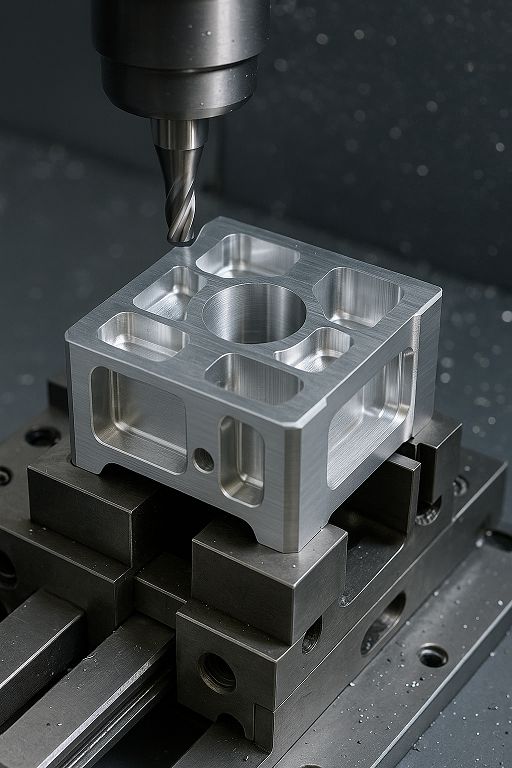
1. Understanding the Causes of Deformation
Before implementing deformation control, it is essential to understand the main causes of dimensional errors:
Machining stress: Uneven cutting forces or tool paths can introduce internal stresses that distort the workpiece after machining.
Material instability: Residual stress within raw materials may cause unpredictable warping once material is removed.
Fixture rigidity: Weak or imbalanced fixture design can allow vibration or deflection during cutting.
Thermal effects: Heat generated by high cutting speeds can lead to heat distortion and dimensional drift.
By identifying the specific source of deformation, manufacturers can select the proper corrective approach.
2. Optimize Machining Parameters to Minimize Stress
One of the most effective ways to reduce machining stress is to optimize cutting conditions. Excessive feed rates, aggressive depth of cut, or blunt tools can generate uneven forces that distort the workpiece.
To maintain dimensional stability:
Use balanced cutting strategies, alternating between roughing and finishing passes.
Employ symmetrical machining when possible to distribute stress evenly.
Allow stress-relief operations between rough and finish machining, particularly for large or thin-walled parts.
Proper control of machining stress is a key element of successful deformation control.
3. Improve Fixture Design for Stability and Support
A robust fixture design is essential for holding parts securely during machining. Inadequate clamping can cause vibration, bending, or displacement—leading to dimensional errors.
Effective fixture principles include:
Supporting the workpiece at critical points to minimize deflection.
Using soft jaws or adaptive clamping to reduce localized pressure.
Ensuring even distribution of clamping force.
Incorporating vibration-damping materials or vacuum fixtures for delicate components.
Proper fixture design not only improves accuracy but also enhances repeatability and long-term reliability.
4. Manage Heat to Prevent Thermal Distortion
Temperature fluctuations are one of the leading causes of heat distortion in machining. When a part heats unevenly, it expands irregularly, resulting in dimensional inaccuracy once cooled.
To control thermal effects:
Use high-efficiency coolants or minimum quantity lubrication (MQL) systems.
Monitor spindle and cutting temperature with sensors for real-time feedback.
Allow thermal equilibrium before critical finishing operations.
Maintain a stable workshop environment with controlled temperature and humidity.
Effective deformation control always includes managing heat distortion, especially for tight-tolerance or large components.
5. Select Materials with High Dimensional Stability
Material stability directly affects the ability to maintain tolerances during and after machining. Certain alloys—such as aluminum, stainless steel, or titanium—may contain residual stress from casting or rolling.
To enhance material stability:
Choose materials with proven dimensional reliability.
Perform pre-machining stress relief heat treatment.
Use uniform raw stock and avoid inconsistent material batches.
Stable materials reduce the risk of post-machining deformation and improve long-term part accuracy.
6. Incorporate Deformation Control into Process Planning
Successful deformation control is achieved through proactive process planning. This involves simulation, digital twin modeling, and predictive analytics to forecast potential deformation under specific machining conditions.
By integrating fixture design, material selection, and cutting strategy into a single plan, manufacturers can significantly reduce the chance of dimensional errors before production begins.
Summary
In precision machining, preventing deformation and dimensional errors requires a comprehensive approach that combines deformation control, proper fixture design, and careful management of machining stress, material stability, and heat distortion.
By understanding the root causes of deformation and implementing preventive strategies, manufacturers can ensure consistent dimensional accuracy, reduce waste, and enhance product reliability.
In a world where precision defines success, mastering deformation control is the key to achieving lasting excellence in CNC machining.
Get our Product Category To know Facilities of Unisontek.