The semiconductor and electronics industries are among the most demanding sectors in modern manufacturing. Devices such as smartphones, medical equipment, and high-performance computers rely on precision-engineered components to function reliably at microscopic scales.
Producing these components requires not only advanced machining capabilities but also strict control over cleanliness, dimensional accuracy, and material properties.
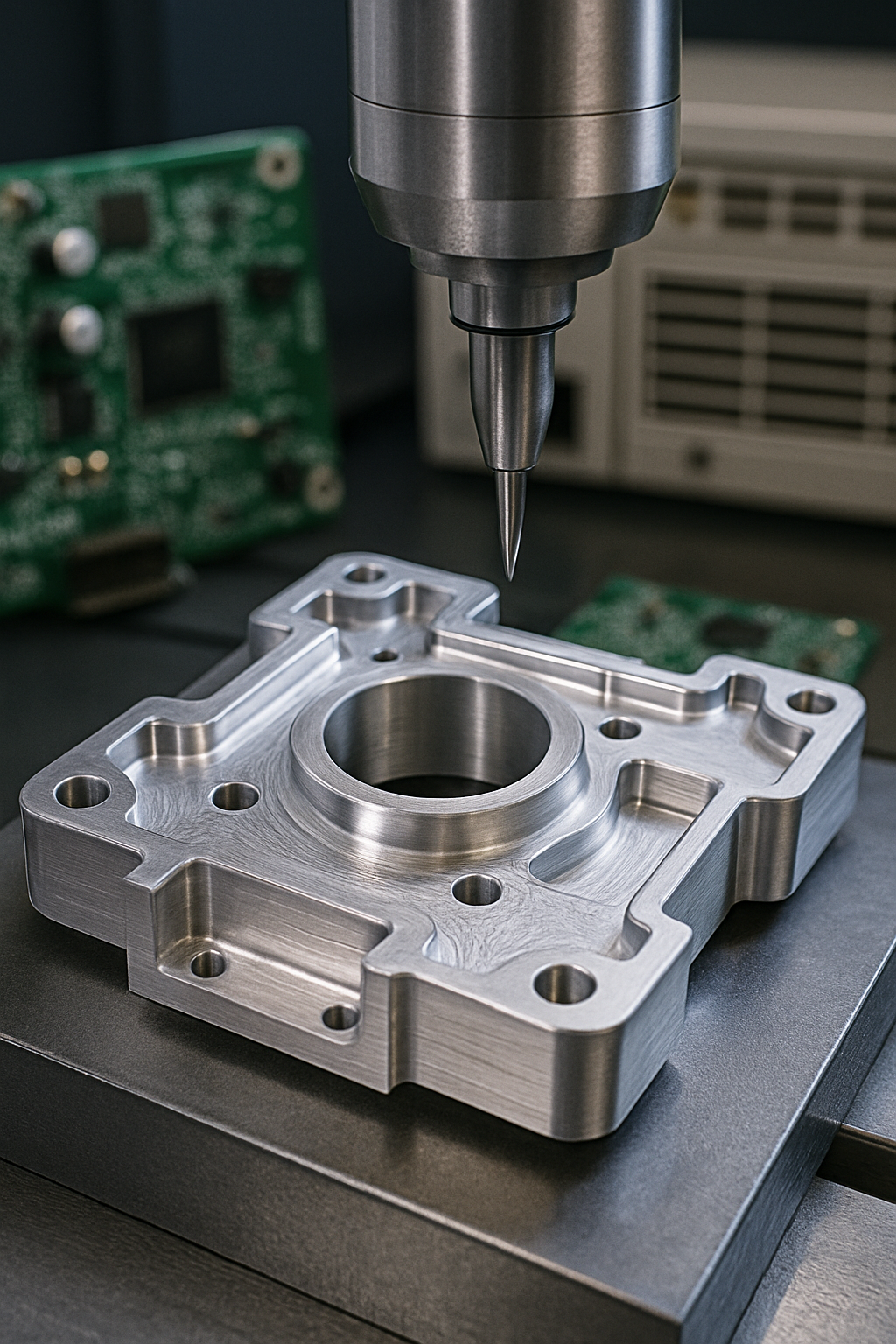
1. The Role of Precision Components in Semiconductors
Semiconductor devices are built layer by layer at nanometer scales.
To support this process, specialized equipment—such as lithography machines, etching systems, and deposition tools—requires precision metal and ceramic parts that can withstand extreme conditions.
These parts ensure stability, accuracy, and repeatability during production. Even minor deviations can lead to defects in microchips, affecting yield and performance.
2. Requirements for Electronic Equipment Parts
Unlike general manufacturing, semiconductor and electronic equipment demand exceptionally tight tolerances and high surface quality.
Dimensional Precision: Tolerances often fall within the micron range.
Surface Quality: Ultra-smooth finishes are necessary to avoid contamination or interference in sensitive processes.
Material Stability: Metals and alloys used must resist corrosion, heat, and chemical exposure in cleanroom environments.
3. Materials Commonly Used
Aluminum Alloys: Lightweight, corrosion-resistant, and widely used in semiconductor chambers and frames.
Stainless Steel: Offers strength and cleanliness, ideal for vacuum chambers and fittings.
Titanium Alloys: Used for parts requiring high strength, chemical resistance, and low contamination.
Specialty Alloys and Ceramics: Applied in ultra-high-vacuum and plasma environments for durability.
4. Machining Challenges
Producing components for semiconductors and electronics presents unique challenges:
Ultra-High Precision: CNC machining must achieve accuracy at the micron or sub-micron level.
Clean Manufacturing: Contamination control is critical; even small particles can damage wafers.
Complex Geometries: Many components require intricate designs that combine milling, turning, and EDM.
Consistent Quality: Large-scale production must maintain uniformity across thousands of parts.
5. Applications in Semiconductor and Electronics Industries
Wafer Handling Tools: Precision frames, holders, and robotic arms for moving wafers safely.
Vacuum Chambers and Components: Metal housings that maintain ultra-clean and stable environments.
Cooling Systems: Heat exchangers and cooling plates for electronic devices and semiconductor machinery.
Connectors and Fittings: High-precision joints that ensure leak-free and contamination-free operation.
6. Future Outlook
As the semiconductor industry moves toward smaller nodes and advanced packaging, demand for even higher-precision machining will continue to grow. The integration of AI, automation, and hybrid manufacturing technologies will help manufacturers meet tighter tolerances while maintaining efficiency. In parallel, sustainability efforts will encourage the development of eco-friendly materials and manufacturing processes.
Summary
Precision components are the backbone of semiconductor and electronic equipment manufacturing.
They must deliver unmatched accuracy, durability, and cleanliness to support industries that define modern technology.
As electronic devices evolve, the importance of precision machining in enabling innovation and reliability will only become greater.
See our Facility and Inspection Equipment