1. What Is Surface Treatment?
Surface treatment refers to processes applied to the exterior of a part to improve its appearance, protect it from environmental damage, or enhance specific functional properties.
Common methods include:
Plating (e.g., chrome, nickel, zinc): Adds corrosion resistance and improves surface hardness.
Anodizing: Often applied to aluminum, improving corrosion resistance and providing an insulating oxide layer.
Powder Coating and Painting: Offer protective and decorative finishes.
Passivation: Removes free iron from stainless steel surfaces to enhance corrosion resistance.
Polishing and Shot Peening: Improve fatigue strength and surface quality.
Surface treatments extend part lifespan, improve wear resistance, and in some cases, optimize friction or electrical conductivity.
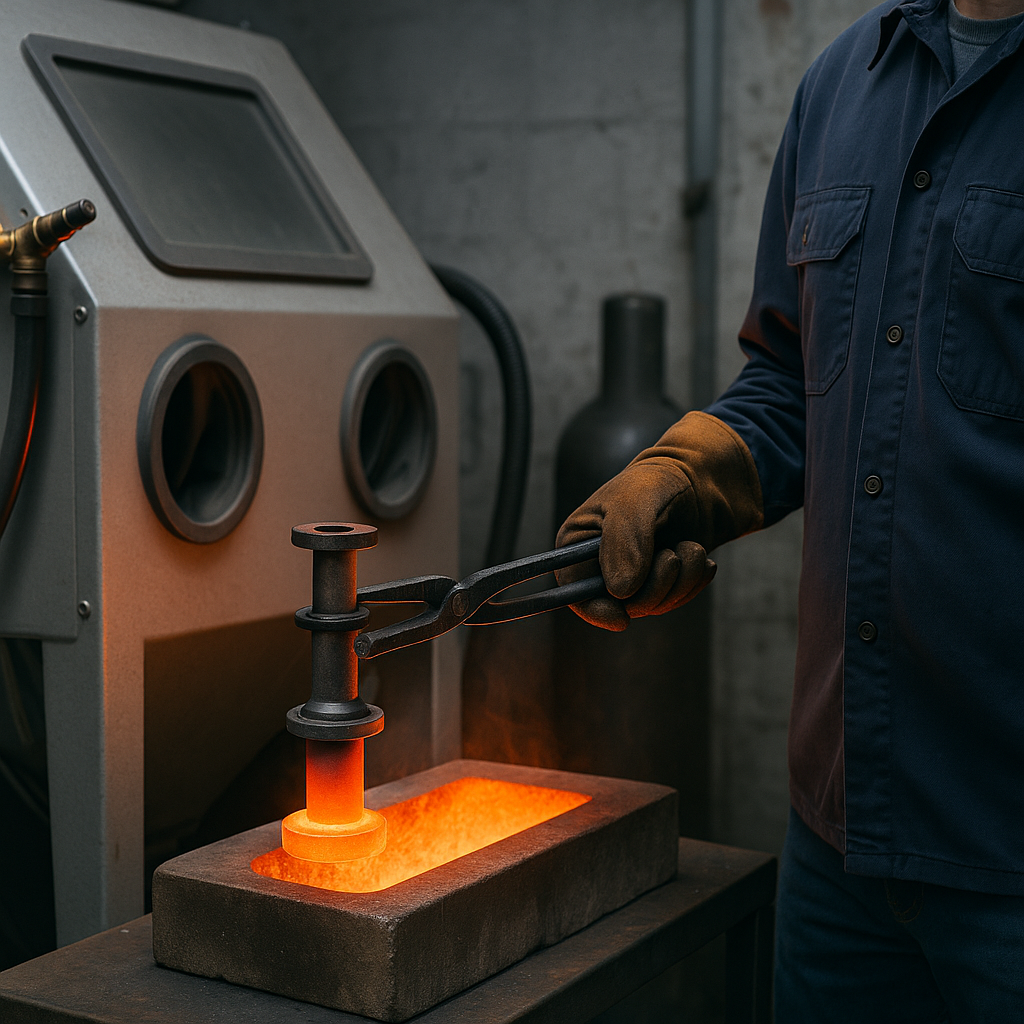
2. What Is Heat Treatment?
Heat treatment alters the internal structure of metals through controlled heating and cooling, changing their mechanical properties without altering their shape. Common heat treatments include:
Annealing: Softens metal, improves machinability, and relieves internal stresses.
Quenching and Tempering: Hardens steel and then tempers it to reduce brittleness.
Case Hardening (Carburizing, Nitriding): Creates a hard outer layer while maintaining a tough interior.
Stress Relieving: Minimizes residual stresses introduced during machining or welding.
By carefully selecting the right heat treatment, manufacturers can enhance strength, toughness, ductility, and wear resistance.
3. Combining Surface and Heat Treatments
In many applications, components undergo both heat and surface treatments to maximize performance. For example:
Aerospace gears may be carburized for wear resistance and then shot peened to improve fatigue life.
Medical implants may be heat treated for strength and then polished or anodized for biocompatibility and aesthetics.
Automotive engine components often require quenching and tempering for durability followed by coatings to reduce friction.
4. Benefits for Manufacturing and End Users
Improved Durability: Parts resist wear, corrosion, and fatigue.
Enhanced Performance: Optimized mechanical properties improve reliability.
Cost Efficiency: Extending the lifespan of components reduces replacement and maintenance costs.
Industry Compliance: Many industries require specific treatments to meet safety and performance standards.
Summary
Surface treatment and heat treatment are essential tools in modern manufacturing.
Together, they ensure that machined parts not only meet dimensional tolerances but also achieve the required mechanical strength, corrosion resistance, and functionality.
By integrating these processes strategically, manufacturers can deliver components that perform reliably in the most demanding environments.
Get more info, please visit our CNC Turning Parts or Products. Contact us for your customized metal parts.