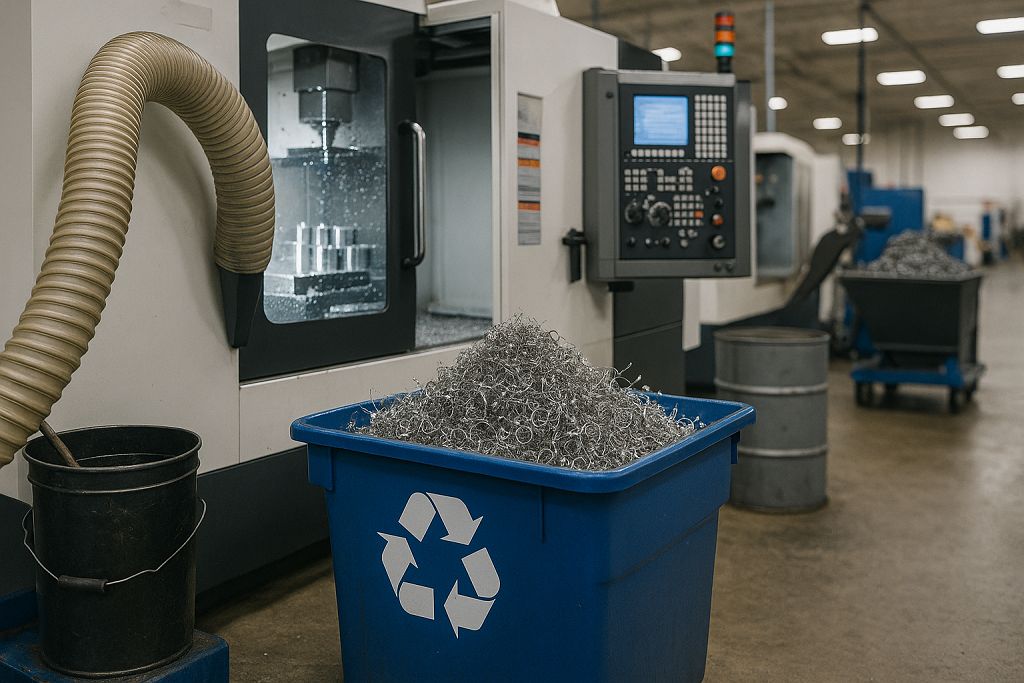
The Environmental Impact of Traditional Machining
Conventional machining involves cutting, milling, drilling, and turning to shape raw materials into precise components. While highly effective, these processes often result in:
Material waste: Large volumes of metal chips and scrap are produced, especially when working with expensive alloys.
High energy usage: CNC machines, cooling systems, and auxiliary equipment consume substantial electricity.
Use of cutting fluids: Traditional coolants can be hazardous, requiring careful handling and disposal.
Carbon emissions: Energy-intensive operations contribute to a manufacturer’s overall carbon footprint.
These challenges highlight the need for more eco-conscious approaches to machining.
Strategies for Reducing Waste
Manufacturers are adopting a range of strategies to minimize material waste, including:
Near-net-shape machining: Using forged or additively manufactured blanks reduces the amount of excess material removed.
Material recycling: Collecting and reusing chips and scrap metal lowers raw material costs and environmental impact.
Optimized cutting strategies: Advanced CAM software enables efficient tool paths that minimize unnecessary material removal.
Component redesign: Lightweight designs not only save material but also improve energy efficiency in end-use applications.
Lowering Energy Consumption
Energy efficiency in machining is equally critical for sustainability. Key approaches include:
High-efficiency CNC machines: Newer models use less energy per cycle while offering higher productivity.
Smart factory integration: Real-time monitoring of machine energy usage helps identify inefficiencies.
Tool life optimization: Proper tool selection and maintenance reduce machine time and energy requirements.
Dry machining and MQL (Minimum Quantity Lubrication): These techniques reduce the need for energy-intensive coolant systems.
Sustainable Cutting Fluids and Alternatives
Cutting fluids, while essential for cooling and lubrication, often present environmental and health challenges. To address this, manufacturers are exploring:
Biodegradable coolants: Eco-friendly formulations reduce disposal risks.
MQL systems: Delivering a minimal amount of lubricant directly at the cutting zone lowers consumption.
Dry machining: Eliminating fluids altogether in certain applications reduces waste and contamination.
Aligning with Global Standards
Sustainability in machining is not only an operational choice but also a competitive necessity. Adhering to international standards such as ISO 14001 (environmental management) demonstrates a commitment to eco-friendly practices.
Many industries, particularly aerospace, automotive, and medical, are increasingly requiring suppliers to meet sustainability benchmarks.
Summary
Sustainability in metal machining is reshaping the industry, driving manufacturers to reduce waste, conserve energy, and adopt greener technologies.
By integrating near-net-shape machining, recycling, energy-efficient equipment, and eco-friendly fluids, companies can lower their environmental impact while improving efficiency and competitiveness.
As global demand for sustainable solutions grows, precision machining will continue to play a vital role in building a cleaner, more responsible manufacturing future.
Get our Product Category To know Facilities of Unisontek.