High-speed machining (HSM) is a powerful technology that helps manufacturers make parts faster and with a better surface finish. It uses higher spindle speeds and feed rates than traditional machining, which means more parts in less time.
But while HSM has many benefits, it also comes with some technical challenges that need to be solved.
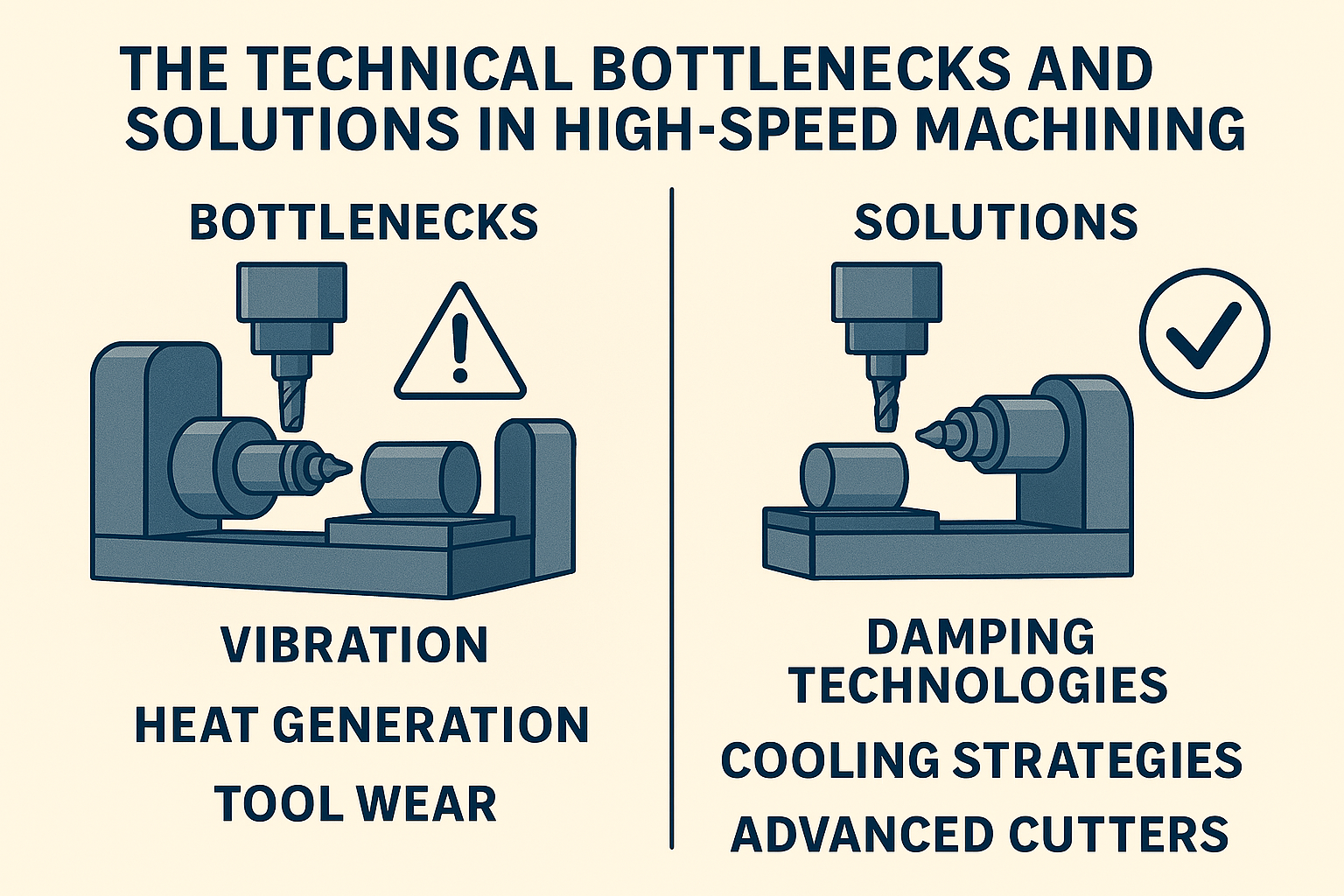
What is High-Speed Machining?
High-speed machining is all about:
Faster cutting speeds
Higher feed rates
Smaller depths of cut
Better tool paths
It is used in industries like aerospace, automotive, and mold-making, where time and surface quality really matter.
Key Technical Bottlenecks
1. Tool Wear and Tool Life
Because tools are moving so much faster, they wear out more quickly.
Higher temperatures can break down cutting edges fast.
2. Heat Generation
HSM generates a lot of heat, which can damage tools and the workpiece.
Heat can also cause parts to expand and change shape, reducing accuracy.
3. Machine Vibration and Chatter
At high speeds, even small imbalances can cause vibration.
Chatter leads to bad surface finishes and tool breakage.
4. Chip Removal
HSM creates a huge amount of chips very quickly.
If chips aren’t removed fast enough, they can clog the cutting area and scratch the part.
5. Control System Limitations
The CNC controller needs to handle huge amounts of data very quickly.
Slow or outdated controllers may not keep up with the fast movements.
Solutions and Countermeasures
1. Advanced Cutting Tools
Use tools with special coatings that resist heat and wear.
Choose tools designed for high-speed operations, like solid carbide or ceramic tools.
2. Better Coolant Systems
Use high-pressure coolant to carry away heat and chips.
Some processes even use air or minimum-quantity lubrication (MQL) to keep the cutting area clean.
3. Machine Design Improvements
Stiffer, more rigid machines can reduce vibration.
Balance spindles and use advanced bearings to run smoothly at high speeds.
4. Optimized CAM Programs
Smarter toolpaths can avoid sudden sharp movements that cause vibration.
Adaptive control can change speed or feed automatically to keep cutting stable.
5. High-Performance CNC Controls
Modern controllers with fast processing can keep up with the complex commands needed in HSM.
Advanced look-ahead functions can plan smooth movements in advance.
Why It Matters
When these bottlenecks are solved, high-speed machining can:
Make parts faster
Improve surface quality
Reduce lead times
Lower production costs
That’s why so many companies are investing in advanced tools, machines, and software to get the most out of HSM.
Conclusion
High-speed machining offers big advantages but also brings technical challenges like heat, vibration, and tool wear.
With better tools, smarter cooling, rigid machine structures, and powerful CNC controls, these challenges can be overcome. As technology improves, HSM will continue to help manufacturers build parts faster, cheaper, and with higher quality.
Please get more information, please visit our CNC Turning Parts or Products.
Contact us for your customized metal parts.