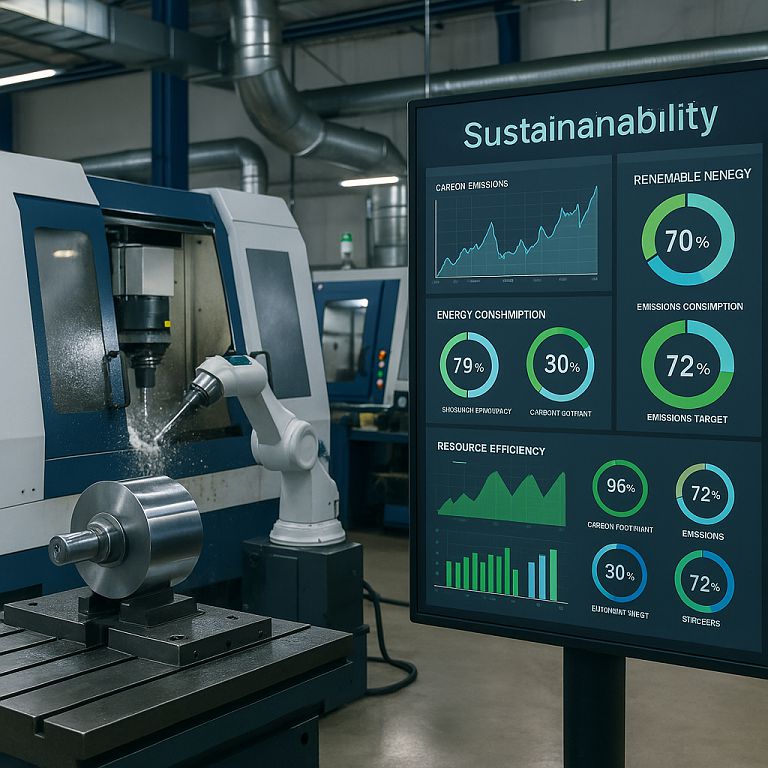
The Concept of Sustainable Manufacturing
Sustainable manufacturing aims to minimize environmental impact throughout the entire production process. It involves optimizing the use of energy, materials, and resources to reduce waste and emissions, while maintaining efficiency and profitability. In essence, it balances three critical dimensions: economic growth, environmental protection, and social responsibility.
For metalworking and precision machining industries, sustainability means:
Reducing energy consumption in machining and finishing processes.
Recycling and reusing raw materials such as aluminum, titanium, and steel.
Adopting cleaner production technologies to minimize coolant and chemical waste.
Designing parts and processes that extend product lifespan and reduce material waste.
The Role of Carbon Management
Carbon management refers to the systematic approach of identifying, measuring, and reducing a company’s carbon footprint. It involves tracking emissions across the entire production lifecycle—from raw material extraction and machining to logistics and product use.
Key strategies include:
Energy efficiency: Using energy-saving CNC machines, optimizing spindle speeds, and reducing idle times.
Renewable energy adoption: Transitioning to solar or wind power for manufacturing operations.
Process optimization: Implementing lean manufacturing to minimize waste and resource usage.
Carbon accounting: Quantifying CO₂ emissions and reporting them in line with global standards such as ISO 14064 or the GHG Protocol.
By actively managing emissions, manufacturers can comply with environmental regulations, strengthen their brand reputation, and meet the expectations of eco-conscious clients.
Digital Tools and Smart Technologies
Advancements in digital technology are accelerating the path toward sustainability. Smart factories equipped with IoT sensors and AI analytics can monitor energy use and carbon output in real time. Predictive maintenance reduces unnecessary machine operation, while data-driven decision-making allows manufacturers to optimize energy consumption and material flow.
Additionally, digital twins and simulation software help engineers design more sustainable processes before production begins—further reducing waste and carbon emissions.
The Business Value of Sustainability
Beyond environmental benefits, sustainable manufacturing delivers tangible business advantages:
Cost savings: Reduced energy and material usage lower operational expenses.
Regulatory compliance: Meeting environmental standards helps avoid penalties and disruptions.
Competitive advantage: Companies that demonstrate sustainability leadership attract more customers and partnerships.
Long-term resilience: Sustainable practices future-proof operations against supply chain and resource challenges.
Summary
Sustainable manufacturing and carbon management are no longer optional—they are essential to the long-term success of modern industry.
By adopting cleaner production methods, leveraging digital technologies, and prioritizing energy efficiency, manufacturers can achieve both environmental and economic goals.
As global awareness of climate impact continues to grow, companies that integrate sustainability into their core strategies will lead the way toward a greener, more responsible industrial future.
Get more info, please visit our CNC Turning Parts or Products.
Contact us for your customized metal parts.