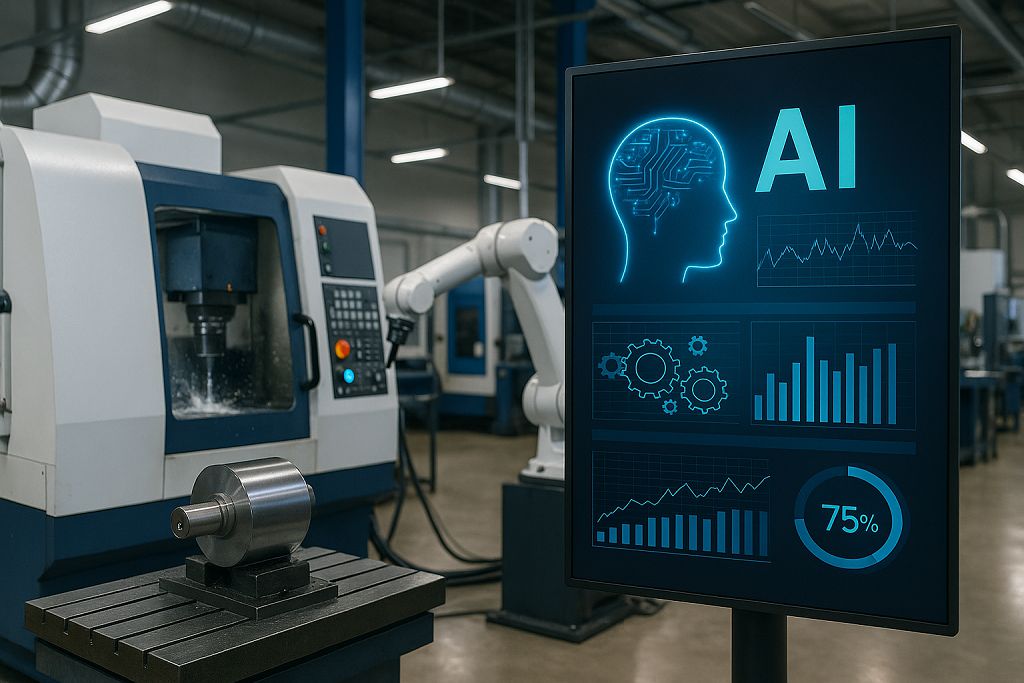
The Evolution of Smart Manufacturing
Smart manufacturing integrates digital technologies such as AI, the Internet of Things (IoT), robotics, and big data into traditional production systems. The goal is to create intelligent, connected, and self-optimizing factories capable of making data-driven decisions in real time. AI serves as the “brain” of this transformation—analyzing massive amounts of production data to identify patterns, predict outcomes, and automate decisions that previously required human expertise.
Key Applications of AI in Manufacturing
1. Predictive Maintenance
AI algorithms monitor machine performance through sensors and data analytics. By detecting anomalies such as vibration, temperature changes, or tool wear, AI can predict equipment failures before they occur. This minimizes downtime, reduces maintenance costs, and extends machine lifespan.
2. Process Optimization
AI continuously analyzes production data to optimize machining parameters, tool paths, and cycle times. It can automatically adjust cutting speeds or coolant flow to improve efficiency and reduce waste—enhancing both productivity and sustainability.
3. Quality Control and Inspection
Computer vision powered by AI enables real-time inspection of machined parts, detecting surface defects, dimensional deviations, or assembly errors faster and more accurately than manual methods. This ensures consistent quality and reduces scrap rates.
4. Supply Chain and Inventory Management
AI-driven demand forecasting helps manufacturers anticipate material needs, manage inventory levels, and respond to supply chain disruptions. Smart logistics systems can also optimize routes and reduce transportation costs, enhancing overall operational resilience.
5. Human–Machine Collaboration
AI enhances—not replaces—human expertise. Collaborative robots (cobots) equipped with AI can work safely alongside humans, handling repetitive tasks while operators focus on programming, design, and strategic decision-making. This balance between automation and human intelligence defines the next generation of smart factories.
The Benefits of AI-Powered Manufacturing
Implementing AI in manufacturing delivers measurable advantages:
Higher productivity: Automated decision-making reduces delays and increases throughput.
Improved quality: Machine learning ensures consistent product accuracy and reliability.
Cost efficiency: Predictive analytics minimize energy use, tool wear, and material waste.
Faster innovation: AI-driven simulations and digital twins accelerate product development.
Sustainability: Smarter resource management lowers carbon emissions and environmental impact.
Challenges and the Road Ahead
Despite its benefits, AI adoption presents challenges. Data integration, cybersecurity risks, and the need for workforce upskilling remain key obstacles.
Companies must invest in both technology and people to fully realize the potential of smart manufacturing.
Partnerships between AI developers, equipment suppliers, and manufacturers are essential to create scalable, secure, and efficient systems.
Summary
AI is reshaping the future of manufacturing by making it smarter, faster, and more sustainable.
As AI technologies mature, factories will evolve into fully connected ecosystems capable of self-learning and self-optimizing operations.
Companies that embrace this transformation will gain a decisive competitive edge—leading the next wave of industrial innovation in the era of intelligent manufacturing.
Get more info, please visit our CNC Turning Parts or Products. Contact us for your customized metal parts.