For decades, the aerospace industry has fought a relentless, invisible war against a powerful enemy: Corrosion. When an aircraft flies through salty maritime air, experiences drastic altitude temperature swings, or sits on humid runways, its metallic bones are under constant chemical attack.
To protect critical steel and aluminum components, the aerospace supply chain traditionally relied on two champion elements: Cadmium and Hexavalent Chromium.
Cadmium acted as an exceptional sacrificial coating for high-strength steel fasteners, preventing rust while offering natural lubricity. Hexavalent chromium (Chromium-VI) served as an unbeatable self-healing corrosion inhibitor for aluminum airframes. Together, they formed the defensive armor of modern aviation.
But this armor came with a devastating environmental price tag. Both cadmium and hexavalent chromium are highly toxic carcinogens, posing severe health risks to factory workers and creating toxic waste streams that plague ecosystems.
Driven by the global “Green Aerospace” movement and strict environmental regulations like Europe’s REACH and international anti-pollution mandates, the aviation sector is forcing a massive shift. The race is on to adopt, machine, and master next-generation Cadmium-Free and Hexavalent Chromium-Free alternatives.
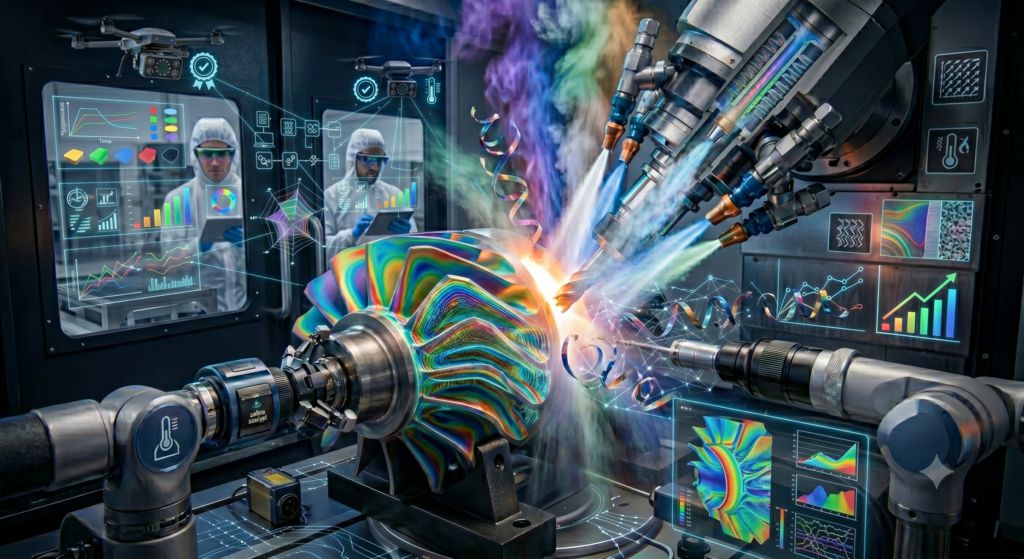
1. The Regulatory Hammer: Why the Old Guard Must Go
The push away from cadmium and chrome is not a voluntary eco-friendly trend; it is a legally mandated restructuring of aerospace manufacturing.
International environmental protection agencies have classified hexavalent chromium and cadmium among the most hazardous industrial chemicals in existence. Prolonged exposure during the coating, spray-painting, or sandblasting phases of manufacturing can cause lung cancer, kidney damage, and permanent DNA mutations in workers.
Consequently, modern aerospace defense contracts and commercial airliner procurement guidelines now actively penalize or outright ban the use of legacy chemical coatings. Manufacturers must pivot to non-toxic alternatives, or find themselves locked out of major global markets.
2. The New Frontrunners: Eco-Friendly Coating Alternatives
Replacing chemicals that have performed flawlessly for fifty years is an incredibly complex material science challenge. Aerospace engineers cannot settle for “almost as good”—the replacement coatings must match the strict corrosion resistance, thermal stability, and adhesion properties of the legacy toxins. Today, two major eco-friendly technologies are leading the charge.
A. Zinc-Nickel (Zn-Ni) Electroplating (The Cadmium Killer)
To protect high-strength steel landing gears, actuators, and fasteners, zinc-nickel plating has emerged as the premier alternative to cadmium. Zinc-nickel provides phenomenal sacrificial protection—meaning the coating intentionally corrodes first to save the structural steel beneath it.
Furthermore, Zn-Ni coatings avoid the hazardous phenomenon of hydrogen embrittlement, which can cause high-strength steel parts to suddenly snap under heavy loads.
B. Trivalent Chromium (Chromium-III) and Anodizing (The Chrome-VI Replacement)
To protect sprawling aluminum airframe structures, chemical processing lines are transitioning to Trivalent Chromium Process (TCP) coatings or advanced Tartaric-Sulfuric Anodizing (TSA).
Unlike its toxic hexavalent cousin, trivalent chromium is significantly safer for human health and the environment. TSA, on the other hand, is a purely electrochemical process that grows a protective aluminum-oxide layer directly out of the metal itself, utilizing non-toxic organic acids to create a porous structure perfectly optimized for paint adhesion.
3. The Manufacturing Bottleneck: The Challenge of Machining New Coatings
While these green coatings are a massive victory for environmental sustainability, they present unexpected, severe bottlenecks when they land on the precision machine shop floor. You cannot process, mill, or grind these new eco-friendly layers using legacy parameters.
The Friction and Lubricity Gap
Cadmium was loved by machinists because it is inherently soft and slippery. When assembly teams torqued cadmium-coated titanium fasteners into place, the metal slid smoothly without binding. Zinc-nickel, by contrast, has a significantly higher coefficient of friction. During automatic fastening or post-plating machining adjustments, Zn-Ni coated parts are prone to galling—a severe form of adhesive wear where the coating sticks, tears, and welds itself to adjacent components, destroying tolerances.
Altered Subsurface Stresses During Post-Processing
Traditional hexavalent chrome coatings formed a dense, hard crystalline layer that was highly uniform. New trivalent chrome (TCP) and anodized layers possess a completely different micro-porosity and elastic modulus.
If a machine shop attempts to grind or finish a component after it has been coated with these green alternatives, the mechanical action of the grinding wheel can easily crack the fragile oxide layer or inject dangerous tensile residual stresses into the skin of the aluminum. As explored in our surface integrity guides, these invisible internal pulling forces can severely compromise the component’s fatigue life, causing cracks to propagate prematurely during flight.
4. Adaptive Strategies for Green Coating Precision
To successfully integrate cadmium and chrome-free coatings without sacrificing part longevity or manufacturing efficiency, aerospace machine shops are completely rewriting their operational playbooks.
- Advanced PVD Topcoats and Lubricants: To counteract the sticky friction of zinc-nickel coatings, manufacturers are applying ultra-thin, dry-film lubricants or specialized Physical Vapor Deposition (PVD) diamond-like carbon topcoats over the plating. These molecular layers restore the vital lubricity needed for smooth assembly and prevent galling.
- Optimized Grinding and Low-Force Toolpaths: When post-machining coated components, CNC programmers utilize ultra-sharp, polished diamond tooling and execute light, high-speed trochoidal toolpaths. Keeping the mechanical forces minimal prevents the delicate green coatings from delaminating or cracking away from the base metal substrate.
- Flawless Pre-Plate Surface Preparation: Because eco-friendly coatings are less forgiving of surface imperfections than legacy chemicals, shops must achieve near-perfect surface integrity before the parts enter the chemical baths.
Utilizing automated shot peening or superfinishing techniques ensures the raw metal skin is perfectly uniform and embedded with protective compressive stress, guaranteeing the green coating bonds flawlessly for life.
The Bottom Line
The green aerospace revolution is fundamentally shifting the chemical makeup of our aircraft. The transition to cadmium-free and hexavalent chromium-free coatings represents a massive step forward for the safety of factory workers, the health of our ecosystems, and the sustainability of global aviation.
However, as the industry embraces this toxic-free future, it must respect the subtle changes in material mechanics that come with it. Green manufacturing is not just about using safer chemicals in a bath; it requires a highly synchronized effort across the entire supply chain—marrying eco-friendly chemistry with adaptive, ultra-precise CNC machining strategies.
By mastering the unique processing demands of zinc-nickel and trivalent chromium, modern manufacturers are proving that we can protect our planet without sacrificing a single micron of aerospace perfection.
Get more info, please visit our CNC Turning Parts or Products.
Contact us for your customized metal parts.